
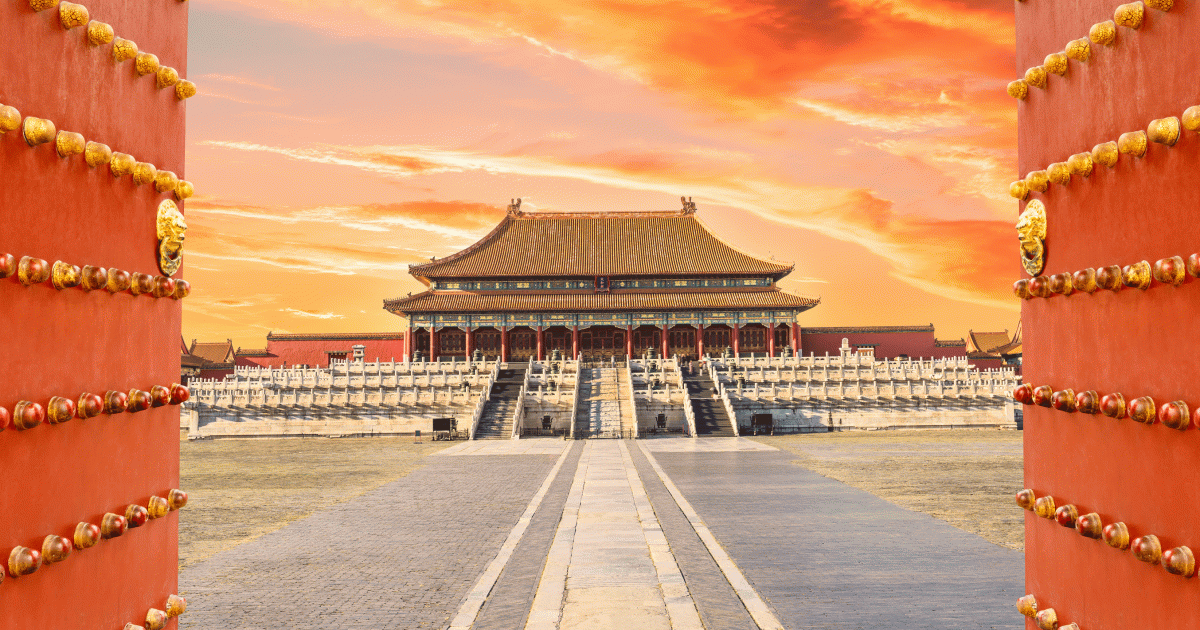
Inside the Imperial Palace of China: The Forbidden City

ircicaarchdata.org – The Forbidden City, also known as the Imperial Palace, is a vast palace complex in the heart of Beijing, China. It served as the home of emperors and their households, as well as the ceremonial and political center of Chinese government, for almost five centuries. This architectural masterpiece, a UNESCO World Heritage site, is a testament to the grandeur of imperial China and its rich cultural heritage.

The History of the Forbidden City

The construction of the Forbidden City began in 1406 during the Ming Dynasty under Emperor Yongle and was completed in 1420. It was designed according to ancient Chinese architectural principles, symbolizing the emperor’s power and the cosmology of the universe. The complex covers an area of 180 acres and consists of about 980 surviving buildings containing 8,707 rooms. The Forbidden City was the ceremonial and political center of Chinese government from the Ming Dynasty to the end of the Qing Dynasty in 1912.

The Layout and Architecture

The Forbidden City is surrounded by a 52-meter-wide moat and a 10-meter-high wall, and it is divided into two sections: the southern section, which is open to the public, and the northern section, which was the emperor’s private residence. The layout of the complex is symmetrical and aligned on a north-south axis, reflecting the traditional Chinese belief in harmony and balance. The main buildings are constructed with wood and are adorned with intricate carvings and paintings.

The Role of the Forbidden City in Chinese History

The Forbidden City was not only the residence of the emperor but also the center of political power in China. It was here that the emperor conducted state affairs, received foreign dignitaries, and celebrated important festivals. The Forbidden City was also the site of many significant historical events, including the abdication of the last emperor, Puyi, in 1912, which marked the end of the Qing Dynasty and the beginning of the Republic of China.

The Art and Treasures Inside

The Forbidden City houses a vast collection of art and treasures, including paintings, calligraphy, ceramics, and sculptures. These artifacts are not only beautiful works of art but also provide insight into the lives of the emperors and the culture of the time. The Palace Museum, which is located within the Forbidden City, is one of the largest museums in the world and is dedicated to preserving and displaying these treasures.

Visiting the Forbidden City

Visitors to the Forbidden City can explore the many courtyards, pavilions, and halls that make up the complex. Each building has its own unique history and purpose, from the Hall of Supreme Harmony, where the emperor held court, to the Imperial Garden, which was the emperor’s private retreat. Guided tours and audio guides are available to help visitors understand the significance of each area.

Preservation and Restoration

The Forbidden City has undergone extensive restoration and preservation efforts to maintain its historical integrity. These efforts include the repair of buildings, the conservation of artifacts, and the management of visitor access to prevent damage. The complex continues to be a symbol of China’s rich cultural heritage and its enduring legacy.

Conclusion

The Forbidden City is more than just a historical site; it is a living museum that tells the story of China’s imperial past. Its grandeur, beauty, and cultural significance make it one of the most important landmarks in the world. A visit to the Forbidden City is a journey back in time, offering a glimpse into the life of the emperors and the splendor of imperial China. As it continues to be preserved for future generations, the Forbidden City remains a testament to the enduring legacy of Chinese civilization.

Urban Life in Australia: City Slickers Down Under

ircicaarchdata.org – Australia, a vast continent-nation known for its rugged wilderness, sun-soaked beaches, and unique wildlife, is also home to some of the most vibrant and dynamic urban centers in the world. From the bustling streets of Sydney to the cultural heart of Melbourne, urban life in Australia offers a unique blend of modernity, natural beauty, and a laid-back lifestyle that is quintessentially Australian.

Sydney, the country’s largest city, is a cosmopolitan hub where the skyscrapers of the Central Business District (CBD) stand in stark contrast to the serene blue waters of Sydney Harbour. The iconic Sydney Opera House and the Harbour Bridge are not just architectural marvels but symbols of the city’s spirit. Sydney’s urban life is characterized by its multicultural population, vibrant nightlife, and a plethora of dining options that cater to every palate. The city’s beaches, such as Bondi and Manly, are a stone’s throw away from the CBD, offering a unique blend of urban and coastal living.

Melbourne, often dubbed the cultural capital of Australia, is a city that prides itself on its arts, food, and coffee culture. The city’s laneways are a maze of street art, boutique cafes, and hidden bars, making it a paradise for those who love to explore. Melbourne’s commitment to sports is evident in its numerous stadiums, including the Melbourne Cricket Ground (MCG), which hosts major sporting events like the Australian Open and the Melbourne Cup.

Brisbane, the capital of Queensland, is a city where the river meets the city. Known for its sunny weather and relaxed atmosphere, Brisbane’s urban life is centered around the Brisbane River, with numerous parks and green spaces offering a respite from the hustle and bustle. The city’s cultural scene is on the rise, with the South Bank Parklands and the Queensland Gallery of Modern Art (GOMA) being key attractions.

Perth, on the west coast, is the most isolated major city in the world, yet it thrives with a unique charm. Its urban life is characterized by its beautiful beaches, such as Cottesloe and Scarborough, and its proximity to natural wonders like Rottnest Island. The city’s Swan River provides a picturesque backdrop for outdoor activities and dining along its foreshore.

Adelaide, the capital of South Australia, is known as the “City of Churches” due to its rich religious heritage. However, it is also a city of festivals, with numerous events throughout the year, including the Adelaide Fringe and the Adelaide Festival. The city’s urban life is centered around its parklands, which encircle the city, and its vibrant Central Market, offering fresh produce and multicultural eateries.

Canberra, the nation’s capital, is a planned city that houses the Australian Parliament and numerous national museums and galleries. Its urban life is characterized by its green spaces, cycle paths, and a strong sense of community. Despite its reputation as a political hub, Canberra offers a relaxed lifestyle with a focus on outdoor activities and family-friendly attractions.

Urban life in Australia is not just about the cities themselves but also about the lifestyle they offer. Australians have a unique way of life that blends the best of city living with the natural environment. The cities are well-planned, with an emphasis on outdoor spaces, public transport, and sustainability. The people are friendly and laid-back, and there is a strong sense of community and inclusivity.

In conclusion, urban life in Australia is a testament to the country’s ability to blend modernity with nature, creating cities that are not only vibrant and dynamic but also livable and sustainable. Whether you’re enjoying the sun on Sydney’s beaches, exploring Melbourne’s laneways, or taking in the views along the Brisbane River, Australia’s cities offer a unique and welcoming experience for all.