
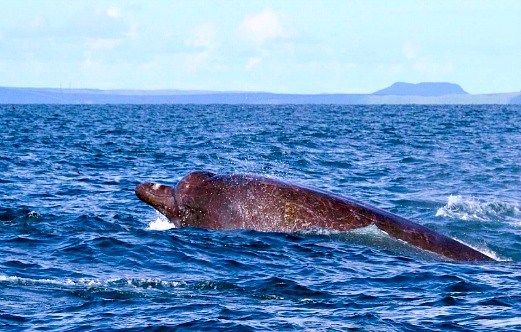
The Elusive Giant: Baird’s Beaked Whale – A Deep-Sea Enigma

ircicaarchdata.org – Baird’s beaked whale (Berardius bairdii) is a colossal marine mammal, often referred to as the “gentle giant” of the deep. Despite its enormous size and unique appearance, it remains one of the least understood cetaceans. Its elusive nature, coupled with its preference for remote, deep-water habitats, has made it a challenging subject for scientific study.   

Physical Characteristics

Baird’s beaked whales are the largest members of the beaked whale family. Adult females can reach lengths of up to 11 meters (36 feet), while males are slightly smaller. Their bodies are long, slender, and spindle-shaped, with a distinctive bulbous forehead (melon) and a long, narrow beak. The melon, which is used for echolocation, is particularly pronounced in males and can be a striking white color.   

One of the most remarkable features of Baird’s beaked whales is their coloration. Adults are typically a dark gray or brown, with a lighter underside. However, as they age, they develop distinctive white patches on their heads and bodies. These patches are thought to be a result of scarring from social interactions or encounters with predators.   

Deep-Sea Dwellers

Baird’s beaked whales are primarily found in the cold, deep waters of the North Pacific Ocean. They are highly migratory, traveling long distances between feeding grounds and breeding areas. These whales are known to dive to depths of over 2,000 meters (6,560 feet) in search of prey, making them one of the deepest-diving marine mammals.   

Diet and Behavior

The diet of Baird’s beaked whales consists mainly of squid, although they may also consume fish and other cephalopods. Their long, narrow beaks are well-suited for capturing prey in the deep sea.   

Little is known about the social behavior of Baird’s beaked whales. They are often observed in small groups, but larger aggregations have also been reported. These whales are relatively quiet compared to other cetaceans, and their vocalizations are rarely heard. However, they do use echolocation to navigate and find prey in the dark depths of the ocean.   

Threats and Conservation

Baird’s beaked whales face a number of threats, including ship strikes, entanglement in fishing gear, and noise pollution. Climate change is also a growing concern, as it can alter ocean conditions and impact the availability of prey.   

Conservation efforts for Baird’s beaked whales are ongoing, but much more research is needed to fully understand their ecology and behavior. International cooperation is essential to protect these magnificent creatures and their habitat.

Conclusion

Baird’s beaked whales are truly enigmatic creatures that continue to fascinate scientists and marine enthusiasts alike. As we learn more about these deep-sea giants, it is imperative that we take steps to protect them and their fragile ecosystem. By understanding and appreciating these animals, we can ensure their survival for generations to come.

From Cheese to Corporate Giant: The Kraft Story

ircicaarchdata.org – The story of Kraft Foods is a tale of innovation, expansion, and the relentless pursuit of culinary convenience. It all began in 1903, in the bustling city of Chicago, Illinois, where James L. Kraft, a Canadian immigrant, started a modest wholesale cheese business. With a horse-drawn wagon, Kraft delivered cheese to local merchants, setting the foundation for what would become a global food empire.

Revolutionizing the Cheese Industry

Kraft’s early success can be attributed to his innovative approach to cheese production and distribution. In 1912, he introduced the first pasteurized processed cheese, which was not only more durable but also had a longer shelf life than traditional cheese. This product, known as Kraft Cheese Slices, was a game-changer. It quickly became a staple in American households, especially during the World Wars, when its convenience and nutritional value were highly valued.

Expanding the Product Line

As the demand for Kraft’s cheese products grew, so did the company. In the 1920s, Kraft began to diversify its product line, introducing a range of food items that catered to the growing demand for convenience foods. The company launched its first line of salad dressings in 1925, followed by the iconic Miracle Whip in 1933. These products were well-received by consumers and further solidified Kraft’s position in the food industry.

The Merger and Acquisition Era

The post-World War II era marked a period of significant growth for Kraft. In 1949, the company merged with Phenix Cheese, a leading cheese manufacturer, further cementing its dominance in the cheese market. The 1980s and 1990s saw Kraft embark on a series of strategic mergers and acquisitions, including the acquisition of General Foods in 1985 and Nabisco in 2000. These moves not only expanded Kraft’s product portfolio but also transformed it into a corporate giant in the food industry.

Kraft Heinz: A New Chapter

In 2015, Kraft Foods Group and H.J. Heinz Company merged to form The Kraft Heinz Company, a move that created the third-largest food and beverage company in North America. This merger was a significant milestone in the Kraft story, bringing together two iconic brands with a shared commitment to innovation, quality, and consumer satisfaction.

Innovation and Sustainability

As Kraft Heinz continues to grow, the company remains committed to innovation, both in its products and its approach to sustainability. From developing healthier food options to reducing its environmental footprint, Kraft Heinz is striving to meet the evolving needs of consumers while contributing to a more sustainable future.

Conclusion

The journey of Kraft Foods from a small cheese business to a global corporate giant is a testament to the power of innovation, strategic expansion, and a relentless focus on consumer needs. Today, Kraft Heinz continues to build on this legacy, embracing new challenges and opportunities as it charts its course into the future. The Kraft story is not just about cheese; it’s about the relentless pursuit of excellence and the enduring quest to bring quality food to tables around the world.